Building off the success of “Tapestry” in 2023, and “Tapestry: Threads” in 2024, we are excited to announce Tapestry: Mosaic!
“In the tapestry of life, we’re all connected.” – Anita Moorjani
The Eyes That Hold the Stars – William Pitts
William Pitts’ The Eyes That Hold the Stars is a work for wind ensemble and electronics that explores ideas of collaboration, family, imagination and wonder.
Pitts has long been inspired by music from film, television and video games, particularly the way these genres combine acoustic and electronic sounds to create immersive musical worlds. In The Eyes That Hold the Stars, he draws on these influences to create a soundscape that offers the listener an escape from everyday reality.
At the heart of the work is something much more personal. Pitts was inspired by the childlike curiosity and sense of wonder he sees in his own children, and the title reflects the seemingly limitless imagination through which children experience the world around them. The music moves between moments of energy, beauty and reflection, combining the colours of the wind ensemble with electronic sounds to create a work filled with possibility.
Above all, The Eyes That Hold the Stars is a celebration of collaboration and family, and of our ability to look at the world with curiosity, imagination and wonder. So to have this piece open our concert, Tapestry: Mosaic, is particularly poignant.
Ye Banks and Braes o’ Bonnie Doon – Traditional, arr. Percy Grainger
Australian-born composer and pianist Percy Grainger had a lifelong fascination with folk music. He travelled extensively collecting traditional songs and melodies, and held the musicians who preserved these traditions in the highest regard. Grainger once referred to folk singers as the “kings and queens of song”, recognising that their individual performances and interpretations were an important part of keeping these musical traditions alive.
Ye Banks and Braes o’ Bonnie Doon is based on a well-known Scottish song associated with the poetry of Robert Burns. The text describes the natural beauty surrounding the River Doon in Ayrshire, contrasting the peaceful landscape with the sadness of lost love.
Tha Mi Sgìth – Traditional, arr. Brian Beck
Tha Mi Sgìth is a traditional Scottish Gaelic folk song whose title is commonly translated as “I am weary” or “I am tired”. The song tells a story of forbidden love, separation and longing.
In the story, a fairy is cutting bracken when he sees a beautiful young woman walking through the countryside. The two fall in love and begin spending their days together. Her family, however, strongly disapproves of the relationship. Eventually, her father forbids her from seeing the fairy and locks her away.
The fairy is left alone, returning to his work cutting bracken while longing for the woman he has lost. This sense of weariness and separation lies at the heart of the song.
Bookmarks from Japan: Movt. III – The Great Wave off Kanagawa – Julie Giroux
Julie Giroux’s Symphony No. IV, Bookmarks from Japan, began with an unusual source of inspiration. The composer was given a set of six decorative bookmarks by friends, each depicting a different image connected with Japanese art and culture. Each bookmark included its own small image and purple silk string, and Giroux eventually transformed the six images into the six movements of her symphony.
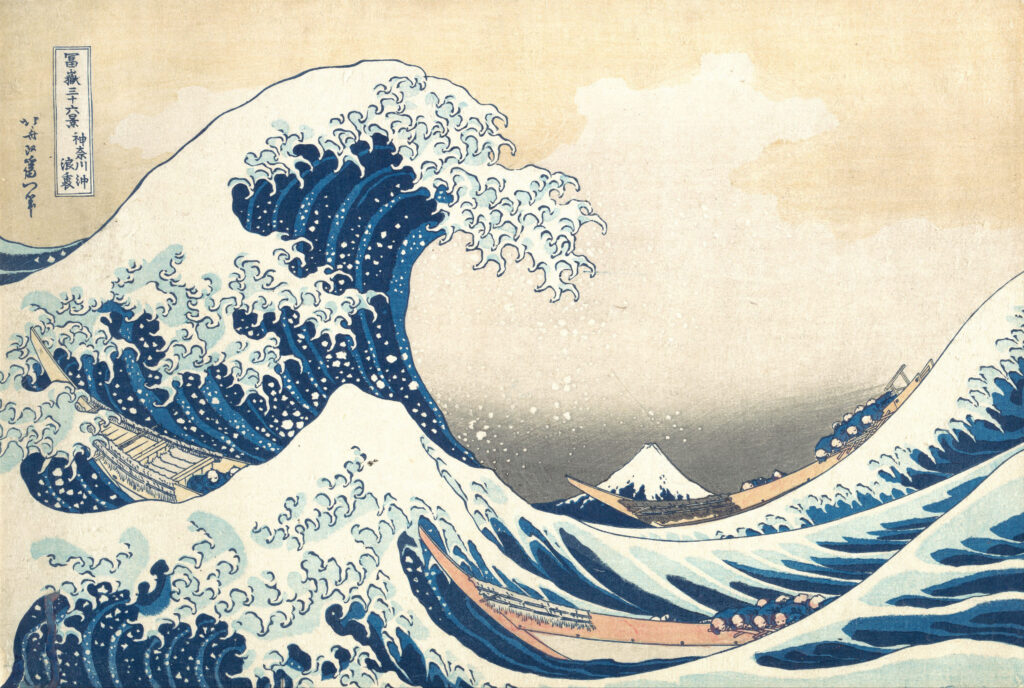
The Great Wave off Kanagawa takes its inspiration from one of the most recognisable images in Japanese art: Katsushika Hokusai’s famous woodblock print from his series Thirty-six Views of Mount Fuji.
The wave begins far out at sea, small and almost unnoticed beneath sparkling sunlight. As it travels towards the shore, it gradually gathers strength and momentum. The music grows increasingly powerful and turbulent as the wave rises, before finally reaching its dramatic peak and crashing onto a rocky shore.
Intermission
空を削るもの (The Skyscrapers) – Daisuke Shimizu
Japanese composer Daisuke Shimizu describes Skyscraper as a work inspired by both the physical image of towering buildings and the hopes of young people living in an uncertain world.
As he composed the work, Shimizu imagined a young man surrounded by the chaos of the modern world and by enormous skyscrapers rising around him. Wanting to escape from reality, he begins to run. Before he realises what is happening, he finds himself flying upwards and travelling between the buildings.
At first, he is unsure of where he is going. Eventually, however, he sees a light shining high above him and begins moving towards it. For Shimizu, this light represents our dreams and hopes for the future.
The work was influenced by the considerable disruption and uncertainty experienced around the world from 2020 onwards. In particular, Shimizu thought about young people whose education, music-making and everyday lives had been dramatically affected.
Despite those challenges, he was inspired by the determination of young musicians who continued to practise, perform and pursue their dreams. Skyscraper therefore becomes more than an image of a city. Shimizu encourages us to continue looking upwards and moving towards hope, even when the world around us feels uncertain.
Wayfaring Stranger – Traditional, arr. Christopher Nelson
Poor Wayfaring Stranger is a traditional American folk spiritual that has been passed down through generations in many different forms.
Its text tells the story of a traveller journeying through a difficult and troubled world. The road is long, hardship is unavoidable and darkness often seems close at hand. Yet the traveller continues forward, sustained by the belief that beyond these struggles lies peace and reunion with loved ones.
Although the traveller openly acknowledges the difficulties of the journey, there is also a strong sense of determination. They will continue moving forward despite everything that stands in their way.
Christopher Nelson’s arrangement develops these ideas through the colours and textures of the wind ensemble. Moments of darkness and uncertainty are balanced by passages of warmth and strength, reflecting both the difficulties of the journey and the traveller’s unwavering resilience.
Urban Light – James M. David
James M. David’s Urban Light takes its inspiration from the iconic artwork of the same name by American artist Chris Burden. Located outside the Los Angeles County Museum of Art, Urban Light consists of more than 200 restored cast-iron street lamps collected from communities throughout Southern California. Arranged in tightly spaced, repeating rows, the lamps create one of Los Angeles’ most recognisable public artworks.
During the day, the installation is defined by its repeating patterns, symmetry and the interaction between the structures and the bright Californian sunlight. At night, however, the character of the artwork changes completely. The lamps illuminate the space around them, creating a glowing environment through which visitors can walk.
David translates these visual ideas into music. Repeated patterns, rhythmic energy and layers of instrumental colour suggest the ordered rows of lamps, while changing textures and sonorities evoke the play of light across the installation.
Like the artwork that inspired it, Urban Light brings together something historic and something modern. Individual objects from the past are arranged in a new way to create something vibrant, contemporary and distinctly connected to the energy of the city.
Five world-class musical acts join the multi-award winning West City Concert Band in this not to be missed concert celebrating diverse cultural backgrounds and the things that weave us together. Discover some of the vibrant musical traditions that thrive in our own backyard and how intersections with other cultures can create something truly special.
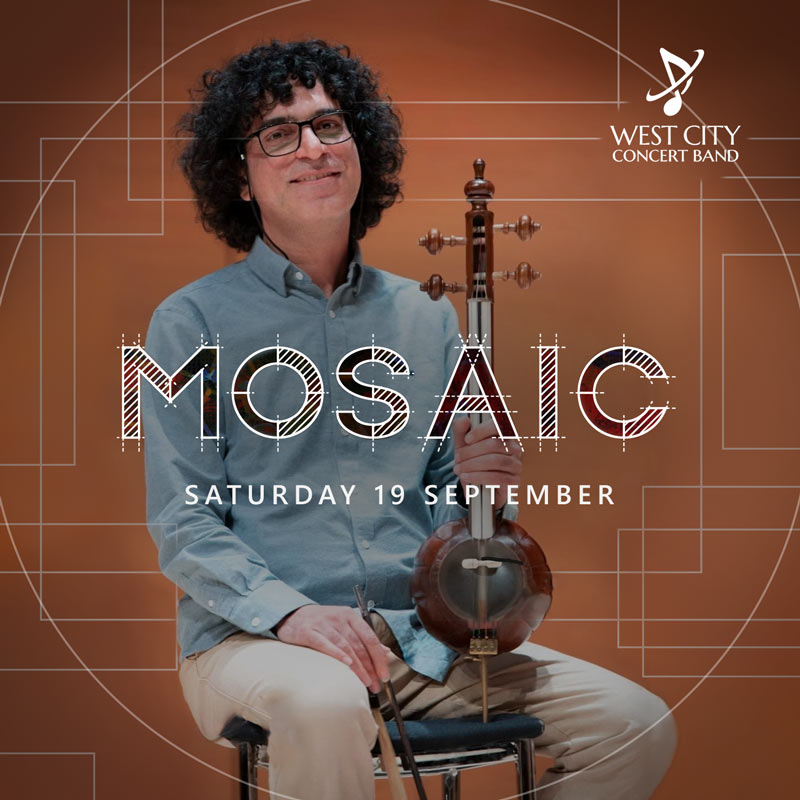
Rasoul Abbasi is a UNESCO award-winning Iranian kamancheh player based in Auckland. Along with an academic background in music from the University of Tehran, he has been involved internationally in many projects across various music genres, including outstanding live improvisations. Rasoul appeared with West City Concert Band for our first Tapestry concert in 2023.
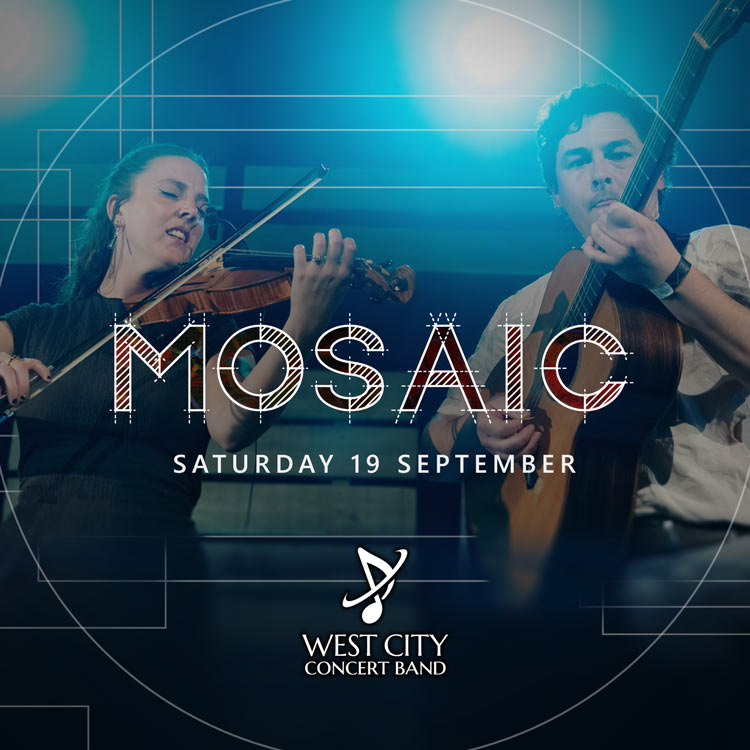
Marika Chia and Adam Ogle
Marika Chia has been in the music scene in New Zealand for over a decade and has performed with musicians such as Ms Lauryn Hill, Josh Groban, Jordan Luck and other NZ greats. She’s been a staple at the Auckland Folk Festival for the past 4 years.
Adam Ogle is a well-known musician in the Australasian scene, known for his work in the musical Once and the band Roughtown who have played at Welly Fest and other festivals across NZ and Australia. Played with the likes of Sharon Shannon and Manus McGuire.
Having recently released their EP they have performed at the Wellington Folk Festival, the Auckland Folk Festival and having been regularly performing around the north island. Together they merge their love of Folk, Gypsy and Contemporary/Original works to create their own sound.
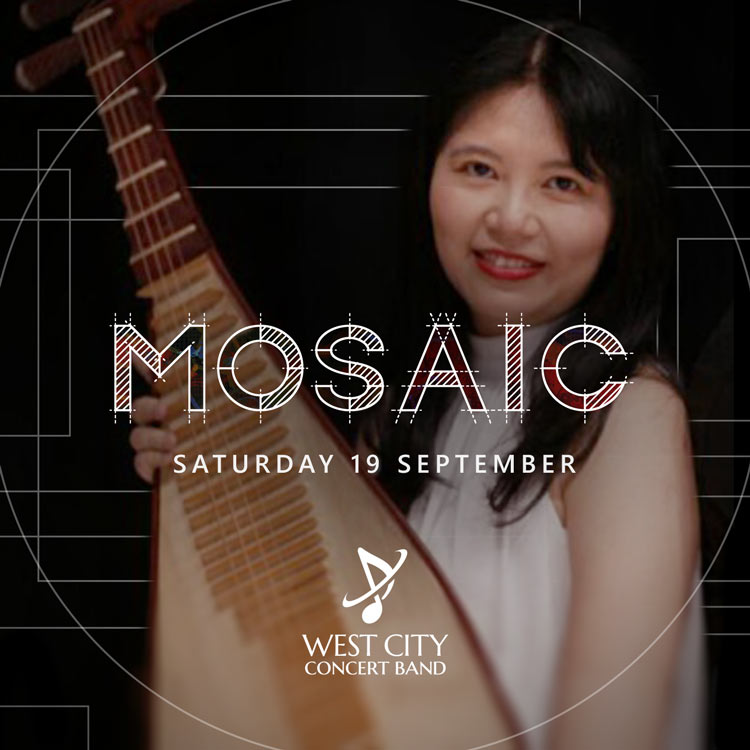
許牧慈 / Dr. Marjorie Mu-Tzu Hsu
Dr. Marjorie Mu-Tzu Hsu is a Pipa (traditional Chinese lute) performer, educator, and musicologist. As a young musician, she won first prize in the Pipa Solo category at the National Music Competition (R.O.C.) three times. Since then, she has performed in and directed more than a hundred concerts and productions. With academic training in both traditional Chinese and Western classical musicology, Marjorie’s research focuses on traditional Chinese and Taiwanese music. She is passionate about sharing the beauty and rich history of the Pipa with audiences and music lovers.
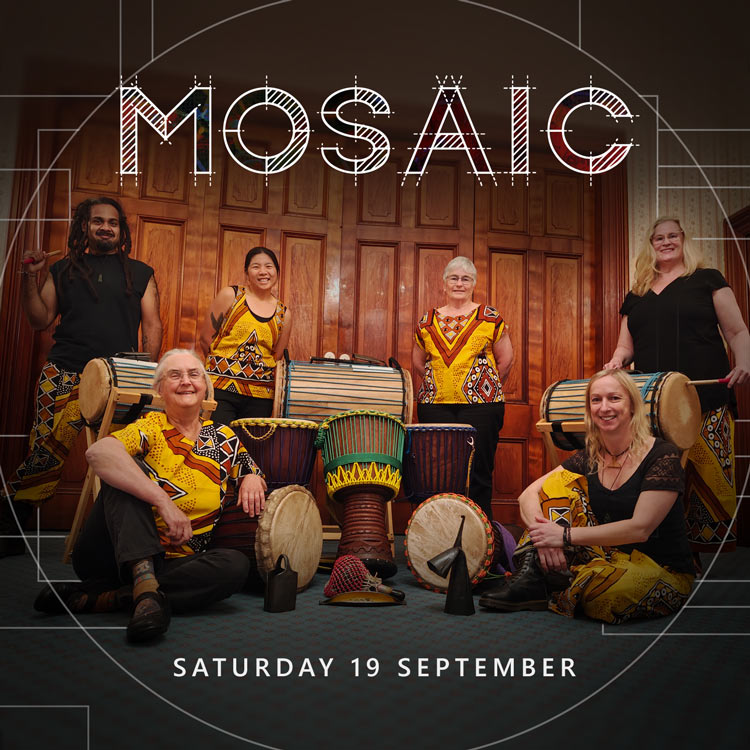
Kra KoTo Kra
Kra KoTo Kra is Auckland’s own West African style Drumming ensemble. Made up of members from Auckland’s ethnically diverse community, they all share a common passion for drumming together. Playing traditional West African rhythms from nations such as Guinea, Burkina Faso, Senegal, Mali and Ghana, the group has been thrilling and delighting audiences since 2018.
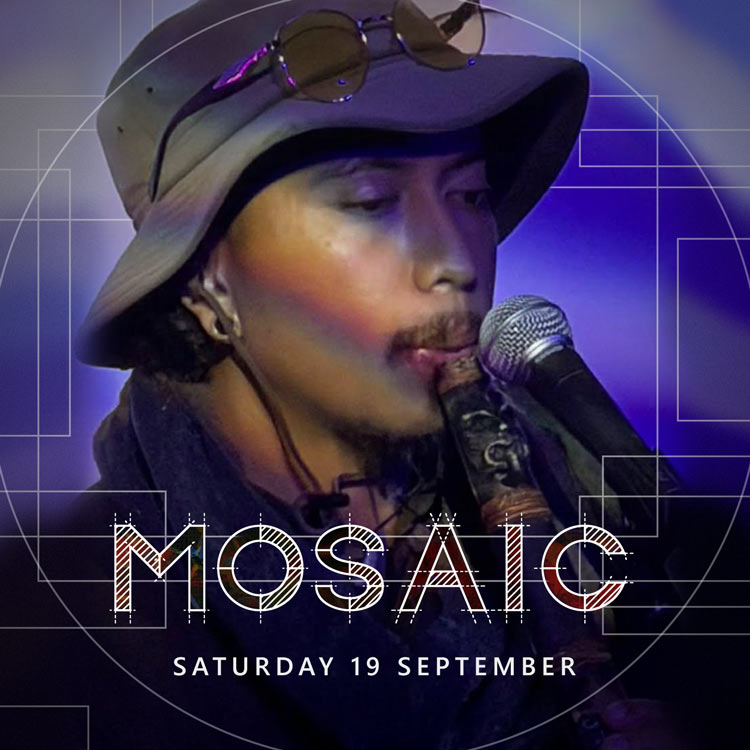
Jadyn Flavell
Jadyn Flavell is a Māori artist born and raised in Whakatū (Nelson), at the top of Te Waipounamu (the South Island), and now based in Tāmaki Makaurau Auckland. Jadyn’s iwi affiliations include Ngāti Te Ata Waiohua, Te Arawa, Ngāpuhi, and Rangitāne. His practice is inspired by ancient forms, ancestral knowledge, and the natural world, exploring form, movement, and connection across multiple mediums.
His current practice is deeply focused on taonga pūoro, exploring the making, design, playing, and cultural knowledge surrounding traditional Māori instruments. His work brings together traditional practices and contemporary methods of design and making, creating connections between mātauranga, material, sound, and form.